DigitalOcean 1GB Droplet Architecture & Deployment Guide: The Golden Standard for Web Starters and Developers
Updated
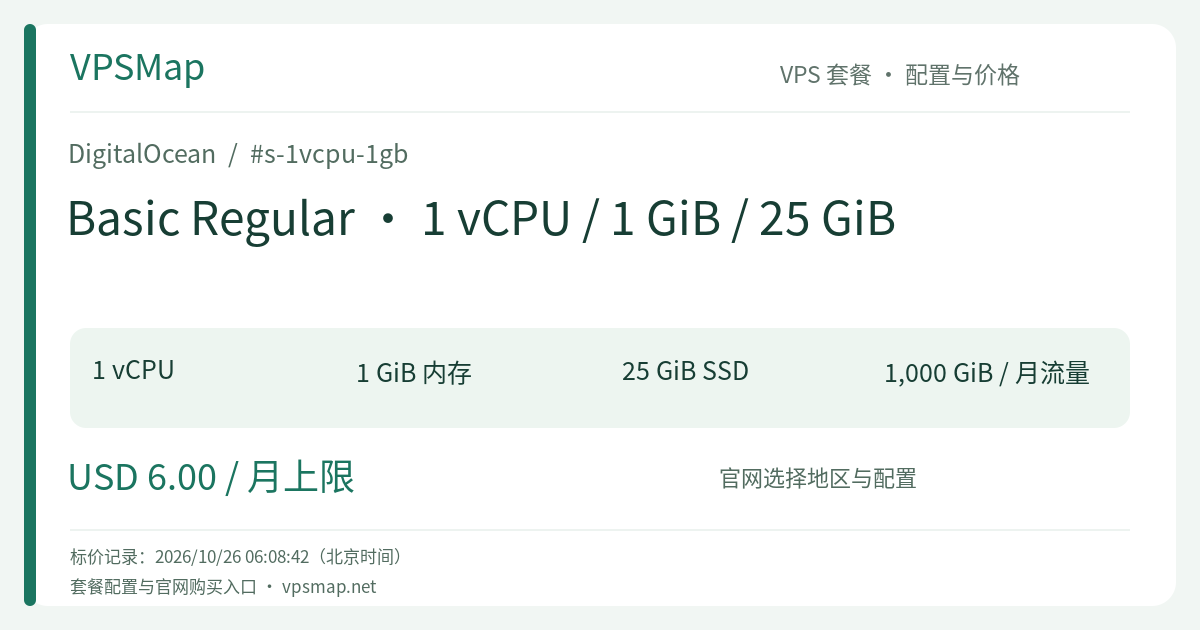
In modern cloud infrastructure, the 1 vCPU / 1GB RAM tier has long stood as the definitive entry baseline for real-world web hosting. DigitalOcean's classic Basic Regular plan is capped at just $6/month (approximately $0.00893 per hour). Compared to ultra-lean 512MB environments, that extra 512MB of RAM paired with a 25GB NVMe SSD delivers a qualitative leap in daily usability.
You no longer need to micromanage every megabyte of operating system overhead. The Linux kernel, package managers, security daemons, and application processes finally have the breathing room required for stable, sustained execution.
Why 1GB Is the Real Turning Point for Production Hosting#
- Zero Out-Of-Memory Panic for Standard Tasks: On a 512MB instance, basic operations like running
npm install, compiling dependencies, or issuing SSL certificates can abruptly trigger the kernel OOM killer. On a 1GB Droplet, a clean Linux installation leaves over 850MB of true available memory, effortlessly accommodating standard web processes. - Practical 25GB Fast SSD Storage: While 10GB disks fill up quickly with system images and temporary logs, 25GB provides ample headroom for multi-version Docker images, long-term log retention, and local database backup archives.
- 1,000 GiB Outbound Bandwidth Pool: With 1 TB of outbound traffic pooled across your team account and backed by up to 2000 Mbps hypervisor connectivity, hosting public-facing blogs or internal APIs will rarely risk surprise bandwidth overage bills.
4 High-Value Production Workloads#
1. Independent Publishing & Content Management (Ghost / WordPress)#
This Droplet represents the sweet spot for content creators and technical bloggers seeking full ownership of their data:
- Ghost CMS: Engineered on Node.js and SQLite/MySQL, Ghost idles comfortably at around 300MB-450MB of memory. On this instance, it delivers near-instantaneous page loads and fluid content editing.
- Streamlined WordPress: Configured with Nginx, PHP 8.x, and MariaDB, supplemented by Redis object caching or WP Super Cache, it easily manages tens of thousands of unique monthly visitors without breaking a sweat.
2. Modern Full-Stack Web Services & APIs#
Whether you build RESTful backends or GraphQL endpoints with Node.js (Express, NestJS), Python (FastAPI with Uvicorn, Django with Gunicorn), or Go, 1GB of memory provides a reliable runtime environment. Paired with 1 Regular shared vCPU, standard API request latencies consistently remain within tens of milliseconds, making it ideal for indie hackers validating MVPs.
3. Lightweight Docker Micro-Environments#
For developers who prefer containerized isolation, this Droplet cleanly powers a 2-3 service Docker Compose stack:
- Workflow Automation: Host n8n to automate notifications, webhooks, and third-party data synchronization across platforms.
- Self-Hosted Password Security: Run Vaultwarden (the resource-friendly Rust implementation of Bitwarden), providing encrypted password synchronization across all your devices on under 50MB of RAM.
- Continuous File Synchronization: Deploy Syncthing to seamlessly sync configuration files, source code, and documents across multiple laptops without third-party cloud lock-in.
4. Persistent Cloud Development Workspace (Remote-SSH)#
Eliminate 'works on my machine' discrepancies by transforming this Droplet into an always-on remote development box. Connect seamlessly via VS Code Remote-SSH or Neovim over SSH. Using tmux, your background test runners and long-lived development servers stay active even when switching devices or traveling.
Performance Tuning for Production#
To extract the maximum stability from your 1GB instance, apply these practical configurations:
- Tune Database Memory Allocations
If self-hosting MariaDB or PostgreSQL, never rely on default configs tailored for large enterprise servers. Inside
/etc/mysql/my.cnf, setinnodb_buffer_pool_sizeexplicitly to256Mor384Mto ensure the database caches hot queries effectively without crowding out the web server. - Set Up a 2GB Contingency Swap File
Allocate a 2GB swap file on the 25GB SSD and set
vm.swappiness = 10in/etc/sysctl.conf. This guarantees that disk swap is treated strictly as an emergency buffer rather than active memory, protecting system responsiveness. - Leverage Free Cloud Firewalls Deploy DigitalOcean Cloud Firewalls directly from the console to block unsolicited port scans before traffic ever reaches your Droplet's kernel, preserving CPU cycles for legitimate user traffic.
Cost Predictability & Scalability#
- Capped Monthly Billing: Continuous 24/7 uptime is capped at exactly $6 per month (after 672 active hours), with per-second billing protecting you against paying for unused time on ephemeral droplets.
- Affordable Automated Protection: For production sites, enabling automated weekly backups costs just 20% of the Droplet price ($1.20/month), storing 4 rolling weekly snapshots for rapid recovery.
- Frictionless Growth Path: When your site traffic scales, you can resize to 2GB or dedicated compute instances with zero architecture rewrites.
If you are looking for an affordable, battle-tested cloud server that balances performance, cost, and reliability, launch your 1GB DigitalOcean Droplet now.